
The detail that stays with you from this month's coverage of the Super Micro export case in The New York Times is not the dollar figure. It is the hair dryer.
According to the Justice Department's indictment and a letter from Senator Elizabeth Warren, warehouse staff at a Southeast Asian tech company used a hair dryer in December 2025 to loosen and move labels and serial numbers. They put the relabeled machines into boxes taken from servers loaded with restricted Nvidia chips. The next day, they showed those boxes to an export control officer from the U.S. Commerce Department.
The inspection happened. The paperwork matched. The labels matched. The real servers, the indictment says, were already on their way to China.
What the case alleges
In March 2026, the Justice Department charged three people with conspiring to evade U.S. export controls. They include a co-founder and board member of Super Micro and one of the company's contractors. Prosecutors say the operation moved as much as $2.5 billion in servers containing restricted chips.
The co-founder has pleaded not guilty. The contractor pleaded guilty last month. The third defendant remains a fugitive, according to the Justice Department. Super Micro has not been charged and says it is cooperating. Trial is expected in 2027.
We covered the indictment when it was unsealed in The Dummy Server Problem. The new reporting sharpens the point.
The inspector checked the wrong thing
The export control officer did not fail. The system did. Every check available to that officer was a check on something attached to the server, not on the server itself.
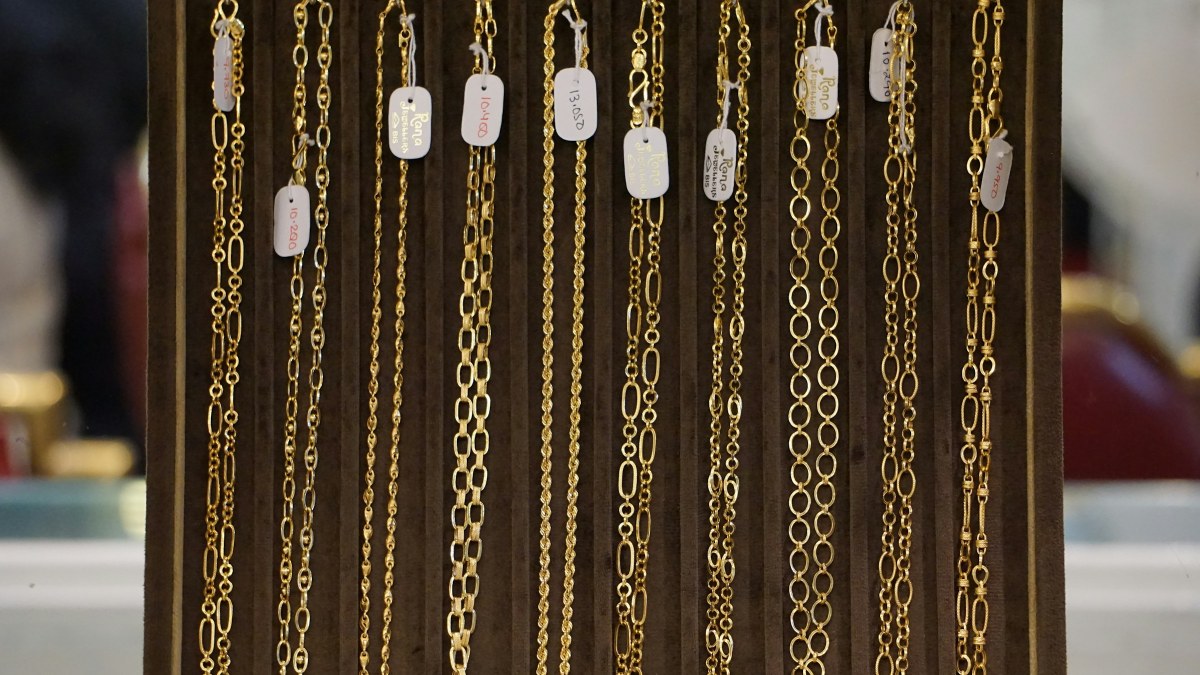
- A label can be peeled off.
- A serial number sticker can be moved.
- A box can be reused.
- A shipping document can be copied.
Each of these is an identifier. None of them is identity. An identifier says what something claims to be. Identity proves what it is. When the proof travels separately from the object, anyone with a hair dryer can separate them.
Why this keeps happening
Export controls on advanced AI hardware rest on a chain of documents. End-user certificates. Commercial invoices. Serial number records. Site visit reports. Each one is a claim about a physical object made by someone with a reason to make it.
That model worked when moving restricted goods was hard. It does not work when the goods are worth billions, the buyers are motivated, and the controls on the object itself are a sticker and a cardboard box.
What physical identity changes
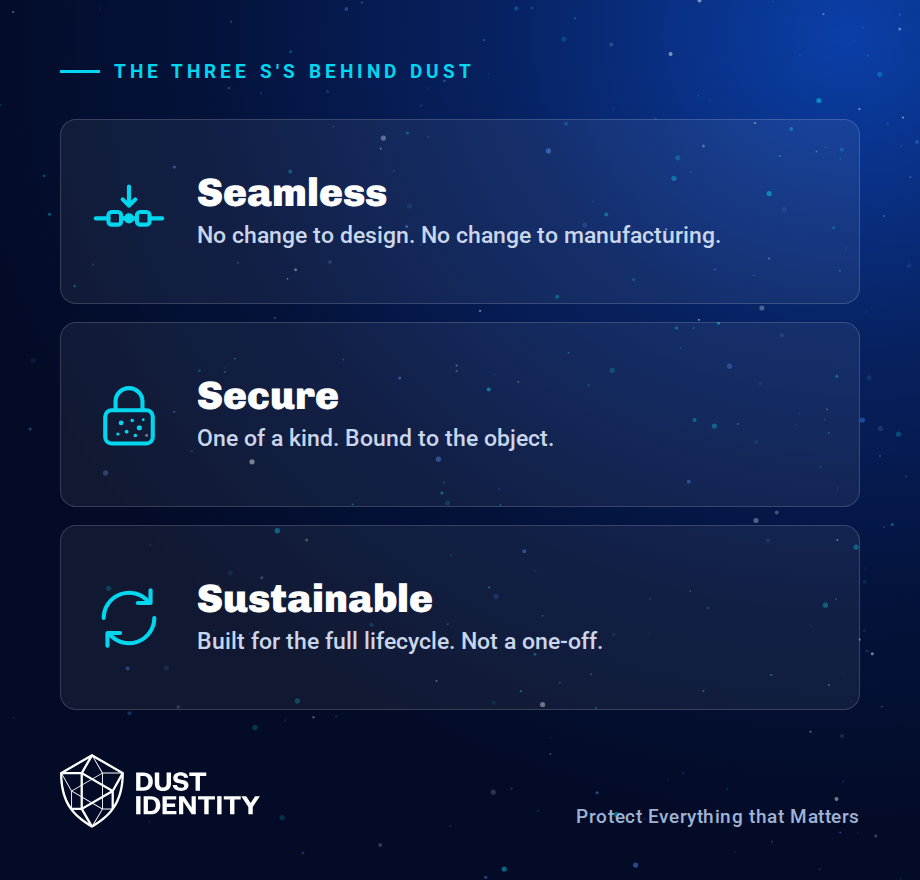
DUST gives each object an identity that is part of the object. Engineered diamond particles, applied at manufacture, form a random pattern that cannot be copied, moved or recreated. A scan reads that pattern and checks it against the record made when the item was built.
Apply that to this case.
- At manufacture: each server, or each GPU board, gets a DUST marking bound to its serial record.
- At inspection: the officer scans the hardware, not the box. A decoy server has no matching identity. The check fails on the spot.
- At every handoff: each scan adds to the chain of custody. A gap in the record becomes visible. So does a swap.
- When tampered with: heat, solvent or abrasion disturbs the pattern. A moved marking reads as tampered, not as genuine.
The hair dryer stops working. Not because the label is harder to peel, but because there is no label to peel.
The policy question
Lawmakers are now asking how chips this valuable could slip through. The honest answer is that our verification tools were built for paperwork. Hardware-level identity is available today. It can be applied in standard manufacturing processes, and it does not depend on trusting whoever holds the box.
Export control will only be as strong as the weakest check in the chain. Right now that check is a sticker.
Talk to us
DUST works with manufacturers and government partners on hardware identity for high-value and controlled components. Request a demo to see how a physical identity check works at the point of inspection.