
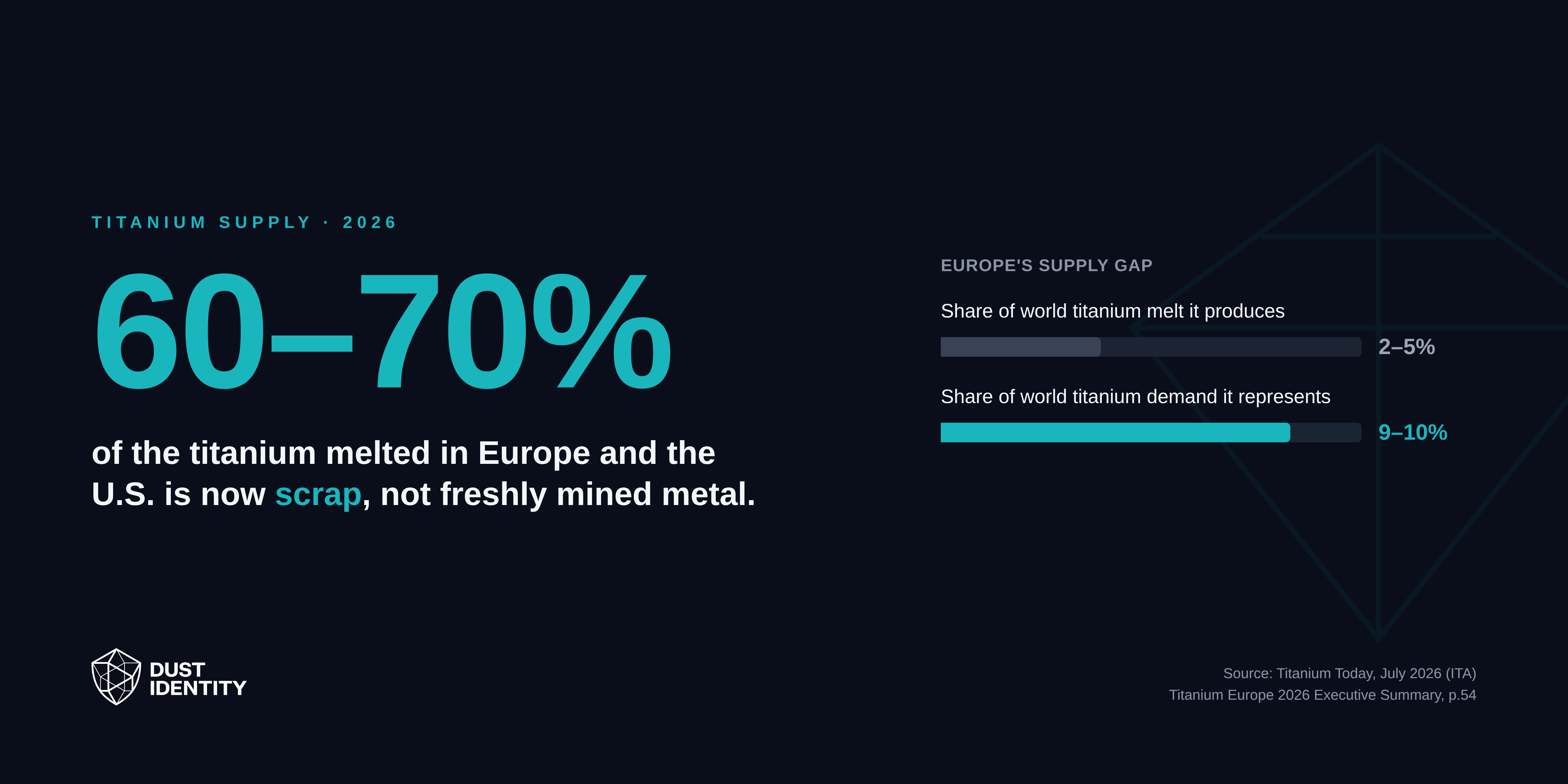
he July 2026 issue of Titanium Today made one number impossible to ignore. Scrap now accounts for 60 to 70 percent of the titanium melt feed in Europe and the United States. Recycled metal is no longer a byproduct of the titanium supply chain. It is the titanium supply chain.
Scrap is now a strategic feedstock
The International Titanium Association's Titanium Europe 2026 executive summary calls scrap a strategic feedstock, not an optional one. Europe feels the pressure most. The region produces only 2 to 5 percent of the world's titanium melt, yet it accounts for 9 to 10 percent of global demand. That gap gets closed with revert and imported material.
This is good news for cost and for carbon. It is a much harder problem for traceability.
Why recycled titanium complicates provenance
A titanium part is only as trustworthy as the metal it was melted from. When recycled material dominates the input, that metal arrives from many sources. Origins blend. Pedigree blurs. Geopolitics has already scrambled sourcing, and aerospace OEMs are now writing raw material traceability into their requirements.
Most of the industry still answers with paperwork. Certificates travel separately from the metal. Documents can be lost. Documents can be forged. In a scrap-fed supply chain, a paper trail is not proof of origin.
Traceability has to live in the metal
Material provenance cannot be an afterthought bolted on at inspection. It has to live in the metal itself.
That is the idea behind Melt to Mission. Mark the material at the melt. Carry an unclonable identity through forging, machining, and the finished part. Verify it at any point in the chain. The result is titanium traceability that does not depend on a folder of certificates keeping pace with the metal.
Recycling titanium is good for the industry. Proving where it came from is what keeps it safe.