
Introduction
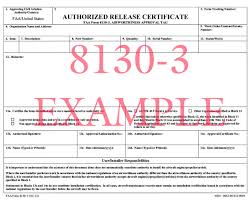
The FAA Form 8130-3 is one of the most important documents in the global aerospace aftermarket. It certifies that a part has been inspected, repaired, or approved for return to service. Airlines, maintenance providers, and regulators rely on this form as proof of airworthiness.
However, as aircraft parts circulate across complex global supply chains, fraud involving 8130-3 documentation is becoming increasingly common.
Understanding how this fraud occurs—and how to prevent it—is critical for protecting safety and supply chain integrity.
What Is an FAA 8130-3 Form?
An FAA Form 8130-3 is an Authorized Release Certificate issued by an FAA-approved repair station or manufacturer.
It confirms that:
- A part meets regulatory requirements
- Required inspections have been completed
- The component is eligible for installation on an aircraft
Similar documentation exists globally, including the **EASA Form 1 used by European aviation authorities.
How 8130-3 Fraud Happens
Fraud typically occurs through manipulation or duplication of documentation rather than through direct counterfeiting of the part itself.
Common fraud methods include:
1. Document Alteration
Legitimate forms are digitally edited to change:
- serial numbers
- repair station identifiers
- inspection details
2. Duplicate Documentation
A valid form may be reused to support multiple parts.
3. Fabricated Certificates
Entire certificates are recreated using design templates.
Because the format of the form is publicly known, creating convincing replicas is relatively easy.
Why Paperwork Alone Is No Longer Sufficient
Most supply chains still rely on documents as the primary proof of authenticity.
However documents can be:
- copied
- edited
- detached from the original part
This creates a fundamental gap between physical objects and digital records.
Without a way to bind documentation to the physical component, the system remains vulnerable.
The Future: Linking Documents to Physical Identity
The most effective way to reduce fraud is to connect documentation directly to a unique physical identity on the part itself while also strengthening how documents are verified and managed digitally.
On the physical side, technologies such as the following can create identities that cannot be duplicated:
- physical unclonable markers
- optical signatures
- microscopic material patterns
These approaches generate a unique physical fingerprint for each component.
At the same time, many organizations are beginning to apply AI-based verification systems to documentation. These systems analyze certificates such as FAA 8130-3 or EASA Form 1 to detect manipulation, inconsistencies, or suspicious patterns.
AI models can examine elements such as:
- digital signatures and stamp authenticity
- formatting anomalies or template inconsistencies
- metadata discrepancies
- serial number conflicts across documents
To support this process, companies are increasingly building structured data models that treat documents not as static files but as interconnected objects within a system. In this model, each document is associated with:
- the physical part identity
- authorized organizations and permissions
- digital signatures and approvals
- inspection and maintenance events
By combining AI-assisted document verification with secure physical identity on the component, organizations can create a stronger link between paperwork and the actual part.
This layered approach significantly reduces the risk that documentation can be manipulated, reused, or detached from the component it is supposed to certify.
Conclusion
Fraud involving 8130-3 documentation is not simply a paperwork issue. It reflects a deeper challenge within global aerospace supply chains: the lack of a secure link between physical parts and digital records.
As aircraft fleets grow and maintenance networks expand, establishing verifiable physical identity for critical components will become essential to protecting safety and trust across the industry.
.jpeg)