
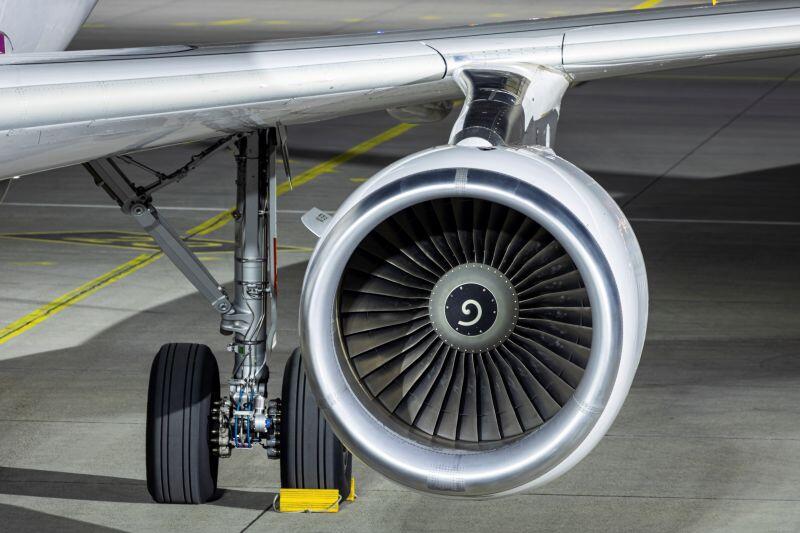
On March 26, 2026, the European Union Aviation Safety Agency issued an urgent notification to airlines and MRO providers across the globe: 625 turbofan engine parts — formally declared non-airworthy and destined for mutilation — had been stolen. The thief didn't break into a warehouse. They impersonated the contracted mutilation provider, rerouted 12 containers mid-shipment in late January, and walked away with critical and life-limited components from four of the most widely-used engine families in commercial aviation: the CFM56, PW1100G, V2500, and RB211.
EASA's assessment is that these parts are likely headed for the open market. Parts that were legally retired from service. Parts that could be sold with falsified documentation and installed on an aircraft carrying hundreds of passengers.
This is not a hypothetical. It is happening now.
A Pattern the Industry Can No Longer Call Rare
If this story feels familiar, it should. In December 2025, the AOG Technics fraud concluded at the UK's Southwark Crown Court. Jose Alejandro Zamora Yrala pleaded guilty after a two-year international investigation revealed that from 2019 to 2023, AOG Technics had sold thousands of CFM56 parts using forged EASA Form 1 and FAA 8130-3 airworthiness certificates. Over 180 engines across major global carriers — United, Southwest, Ryanair, Virgin Australia — were found to contain bogus parts. Aircraft were grounded. Engines were stripped.
In the wake of that case, the FAA and EASA made a striking admission: the infiltration of unapproved parts into aviation supply chains is not a rare occurrence. It is a systemic risk.
The January 2026 heist — reported publicly by EASA this week — confirms it. And it reveals something important about how the attack surface has evolved: the fraudsters aren't just counterfeiting new parts anymore. They're intercepting parts already in the disposal pipeline, before they can be rendered unusable, and re-laundering them back into circulation.
The problem isn't just counterfeit. It's identity fraud at the supply chain level.
Why the Current System Is Vulnerable
The global aviation parts ecosystem runs on documentation. Airworthiness certificates. Maintenance records. Chain-of-custody paperwork. These documents are the backbone of compliance — and they are also the primary target of every fraud scheme in the sector.
Forging an EASA Form 1 is not technically complex. Impersonating a vendor over email or phone, as appears to have happened in the January theft, requires no specialized knowledge. The attack surface isn't technical — it's procedural. And procedural defenses, no matter how well-designed, have a fundamental weakness: they can be mimicked by anyone who understands the process well enough.
Audits help. Regulatory databases of suspected unapproved parts help. Criminal prosecution helps. But all of these are reactive. They identify fraud after parts have already entered the supply chain — sometimes years later, as the AOG Technics case demonstrated.
The question the industry needs to ask is: what would it look like to make this kind of fraud structurally impossible?
The Case for Physical Authentication
Paperwork can be forged. Serial numbers can be stamped. Certificates can be cloned. But a physical, unclonable identity — bound to the part itself at the material level — cannot be replicated, reassigned, or laundered.
This is the premise behind physical unclonable function (PUF) authentication. Rather than relying on documents that represent a part's identity, PUF technology creates an identity that is the part. At DUST Identity, we use the natural randomness of diamond particles to generate a fingerprint that is unique, permanent, and verifiable at any point in a part's lifecycle — from manufacture through overhaul, storage, transfer, and end-of-life disposition.
In a world where that technology is applied at scale, the January heist looks very different. Every one of those 625 parts would carry an identity that cannot be transferred to a falsified certificate. When a buyer on the open market attempts to verify provenance, the physical signature either matches the record or it doesn't. There is no impersonation. There is no laundering. The fraud collapses at the first authentication check.
This isn't a future capability. It exists today, and it is already deployed with aerospace and defense customers who have decided that paper-based trust is no longer sufficient.
The Gap Between Awareness and Action
The industry is increasingly aware of the problem. EASA's rapid public disclosure of the January theft is a sign of growing institutional urgency. The AOG Technics prosecution sent a signal that regulators and law enforcement are paying attention. DFARS and NDAA supply chain integrity requirements in the US defense sector are pushing contractors toward more rigorous part-level traceability.
But awareness has not yet translated into systematic adoption of physical authentication. The dominant response to supply chain fraud in aviation remains documentary: more audits, better databases, stricter reporting requirements. These are necessary measures. They are not sufficient ones.
Bad actors are sophisticated, patient, and financially motivated. The commercial aviation parts market is worth hundreds of billions of dollars, and the pressure on MRO providers to source parts quickly and cost-effectively creates persistent demand in the gray market. As long as a forged certificate is the primary barrier between a stolen part and an installed one, that market will continue to be exploited.
The gap between what the industry knows and what it has implemented is the space where incidents like this one keep happening.
Closing the Gap
The good news is that the path forward is clear. Part-level physical authentication — applied at manufacture and verified at every transfer point — closes the attack vector that makes supply chain fraud possible. It doesn't require trusting intermediaries. It doesn't rely on paperwork chains that can be interrupted or falsified. It makes the part itself the source of truth.
EASA's warning this week is a sobering reminder of how costly the delay can be. The January shipment involved 625 parts. The AOG Technics fraud involved thousands, over four years, across hundreds of engines. The scale of the next incident is unknown. What is known is that the technology to prevent it already exists.
The question is whether the industry moves fast enough to deploy it before the next warning lands.

.jpeg)